
Pool Tile Cleaning in Corona, CA
Pool tile cleaning that removes the calcium line with tile-safe bead blasting, then balances the water so it stays off longer.

Schedule Service!
Expert Pool Tile Cleaning for Corona Pools
That white crust on the waterline is calcium, and Corona grows it faster than almost anywhere.
Every pool in Corona fights the same white line. The fill water here carries a heavy load of calcium, and a summer of 100-degree afternoons evaporates thousands of gallons out of the pool. The water leaves. The calcium stays behind, and it lands right at the waterline where the sun bakes it onto the tile. Brushing takes off the soft film. It does nothing for the hard scale underneath, and the longer that scale sits, the more dirt and oil it traps. A white line turns gray, then brown.
Our pool tile cleaning service removes it with a controlled media-blasting process built for glazed tile. We lower the water a few inches, blast the scale off with glass bead or a mineral media matched to your tile, rinse, and vacuum the spent media out of the pool. Ceramic, porcelain, glass mosaic, and stone each get a different media and pressure. Afterward we test and balance the water, because the chemistry is what decides how fast the line comes back. If you are on a weekly plan, we also set the brushing routine to slow it down.
Most Corona pools look five years younger by the time we pack up. If your waterline is chalky, your spillway is crusted, or the tile has gone dull, call (951) 501-2227 or request a free quote. We will look at the tile and tell you what it needs.
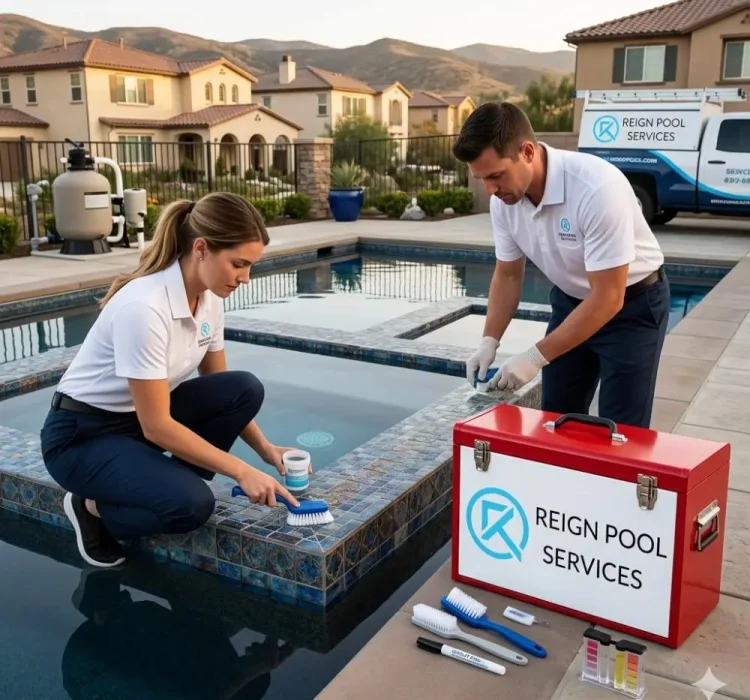
Need pool tile cleaning? Schedule your free quote from Reign Pool Services
We Are Experts With:




Pool Tile Cleaning in Corona: Why the Calcium Line Keeps Coming Back
Scale on pool tile is calcium carbonate, the same stuff as chalk and limestone. It is not very soluble, and it drops out of the water the moment the balance tips. Three local conditions tip it.
Hard fill water
The water coming out of a Corona hose tap already runs high in calcium hardness. The ideal range for a pool is 200 to 400 ppm, and many pools here sit well above that before anyone adds a thing. Once hardness climbs past 500 ppm, pH and alkalinity have to be held low to keep the water from scaling, and that gets harder every month. Near 1,000 ppm the water cannot be balanced at all, and a partial drain is the only way back.
Evaporation
Evaporation removes pure water and leaves every dissolved mineral behind. A Corona pool can lose an inch or more a week in July. Each refill from the hose adds more calcium on top of what was already concentrated. So the hardness number climbs all summer, and the waterline is where that concentrated water meets hot tile and dry air. That is why the band is thickest on the sunny side of the pool and on spillways that run all day.
Water balance drift
Calcium stays in solution only when pH, alkalinity, hardness, and temperature are in balance with each other. The saturation index puts a number on that balance, and the CDC’s healthy swimming guidance covers the ranges behind it. Between minus 0.3 and plus 0.3 the water is stable. Above plus 0.3 it is scale forming, and it starts depositing on the tile, the heater, and the salt cell. High pH is the usual trigger in Corona. Aeration from water features and warm water both push pH up, and warm water also makes calcium less soluble. So a hot August with the spillway running is the perfect recipe for a new layer of scale.
Carbonate Scale or Silicate Scale?
Most of the white line on Corona tile is calcium carbonate. It is chalky, it fizzes when a drop of acid hits it, and it comes off cleanly with media blasting. Calcium silicate is the other kind. It is harder, grayer, and often sits in a thin sheet below the carbonate layer. It does not react to acid and takes more time under the blaster. We check which one you have before we quote, because the answer changes the media and the time on the job. If the tile has been scaled for years, there is usually some of both.
How We Clean Pool Tile
Pool tile cleaning is a one-visit job on most Corona pools, and it follows the same steps every time.
Inspection
We look at the tile material, the thickness of the scale, and the grout. Loose or hollow tiles and missing grout get flagged before any media touches the wall, because blasting cannot fix them and can make them worse. We also check for glass tile and natural stone, which take a softer media and lower pressure.
Lowering the water
We drop the water level only as far as needed to expose the waterline and the first few inches below it. That is usually six to eight inches, not a full drain. Spillways, raised walls, and spa dam walls get exposed the same way.
Media blasting
A glass bead or mineral media, driven by compressed air at a pressure set for your tile, strips the scale without cutting the glaze. The media breaks the bond between the calcium and the tile rather than grinding the tile itself. Heavy silicate takes a second pass. Grout gets a lighter touch so it stays put.
Rinse, vacuum, and detail
Spent media and loosened scale fall into the pool. We rinse the tile line, vacuum the media off the floor, and detail the corners and tile edges by hand. Then the water level comes back up.
Water balance and sealant
We test pH, alkalinity, and calcium hardness and bring them back into balance so the clean tile does not start scaling the same week. A sealant that slows future buildup is available as an option. On a weekly plan we add waterline brushing to the routine so the soft film never hardens into scale.
Will Bead Blasting Damage Tile or Grout?
Done correctly, no. The media and pressure are chosen for the surface, and glazed ceramic and porcelain handle glass bead without a mark. Glass mosaic and soft stone need a finer media at lower pressure, and we run a test patch first. Grout that is already failing can come out under any cleaning method, which is why the inspection matters. We tell you before we start if the grout is the weak point, and we blast around it rather than through it.
The two methods that do damage tile are the ones people try at home. Pumice scratches glazed tile and leaves swirl marks that catch the next layer of scale. Strong acid eats grout, etches stone, and pits the metal on nearby fittings.
How Often Should Pool Tile Be Cleaned in Corona?
For most Corona pools, every 12 to 18 months keeps the line under control. Pools with a spillway, a raised spa, or a sheer descent scale faster because the water is always moving and evaporating on the feature. The same goes for pools in full sun, pools with heavy use, and any pool where the chemistry has drifted. A pool on weekly service with the hardness and pH held in range can stretch the interval past two years.
The practical test is the brush. If weekly brushing keeps the waterline clean, the pool is not due. If a white band stays behind after a brush, scale has formed and it will only get thicker.
Why DIY Tile Cleaning Goes Wrong
We get called after a lot of weekend attempts. Pumice stones are the usual one. They work on the first inch and then scratch the glaze, and scratched tile scales faster than smooth tile. Muriatic acid on a sponge takes the carbonate off but softens the grout and etches stone, and it does nothing for silicate scale. Pressure washing blows water everywhere and pushes grout out of the joints without moving hard scale.
The other problem is what gets left behind. Acid runoff drops into the pool and crashes the alkalinity. Pumice dust clouds the water. A professional pool tile cleaning removes the scale and the mess at the same time, and it takes an afternoon rather than a season of Saturdays.
What Tile Cleaning Will Not Fix
Blasting removes what is sitting on the tile. It cannot restore what is gone from the tile. Glaze that was scratched by years of pumice stays cloudy after the scale comes off, and we will tell you that at the inspection rather than after. Cracked, hollow, or missing tiles need a tile setter, and we point them out before the job so nothing surprises you. Grout that has eroded below the tile face stays eroded.
Stains below the waterline are a different problem too. Calcium that has spread across the plaster, or metal staining on the steps and floor, calls for a drain and acid wash rather than tile work. If the tile line is the only issue, pool tile cleaning is the cheaper fix by a wide margin. If the whole surface is involved, we say so.
Keeping the Scale Off After Cleaning
Clean tile stays clean when the water stays balanced. Calcium hardness between 200 and 400 ppm, pH held in range, and alkalinity kept from locking the pH high are the three numbers that matter. In Corona that means testing hardness regularly, since it only goes up, and planning a partial drain when it climbs too far. A sequestering agent keeps calcium in solution and slows crystal formation, and it is a common part of the plan on pools that scale fast.
Brushing the waterline every week lifts the oils and soft film before they harden. That is part of every visit on our weekly pool service. The same water that scales the tile is scaling the heater and the salt cell, so holding the balance protects more than the look of the pool.
Spas, Spillways, and Water Features
Attached spas scale faster than the pool because the water is hot, and hot water holds less calcium. The spa dam wall and the spillway lip are usually the worst spots in the whole backyard. Raised bond beams, sheer descents, and fountain bowls scale on the dry side where the water splashes and evaporates. We clean all of it in the same visit and quote it as one job. Tell us about every feature when you call so the quote covers the whole pool. If the spa itself is cloudy or scaled inside, our spa cleaning service handles that.
Why Corona Homeowners Choose Reign for Tile Cleaning
We are based in Corona and we clean tile on the same hard water you fill your pool with. Every job starts with an inspection, uses the media that fits your tile, and ends with the water balanced so the result lasts. There is no acid, no pumice, and no pressure washer. The pool is swimmable the same day. Call (951) 501-2227 or request a free quote.
Pool Tile Cleaning in Corona: Frequently Asked Questions
Quick answers from the crew.
Cost, process, and timing
We quote by the length of the tile line, how thick the scale is, and whether a spa, spillway, or water feature is included. Light carbonate scale is a shorter job than years of silicate. You get the number after a look at the pool and before we start.
No. We lower the water only six to eight inches, enough to expose the waterline and the band just below it. A full drain is only needed for an acid wash or a full-surface stain problem, which is a different service.
Most Corona pools take a few hours, including lowering the water, blasting, vacuuming the media, and refilling. Heavy silicate scale, glass mosaic, or a lot of water features add time. The pool is swimmable the same day.
Every 12 to 18 months for most pools in Corona. Spillways, raised spas, and full-sun pools need it sooner. A pool on weekly service with balanced water can go longer. If brushing no longer clears the white line, it is due.
Yes, when you tell us about them. We clean the spa dam wall, spillway, raised walls, and fountain tile in the same visit and quote it as one job. Spa interiors with cloudy or scaled water are a separate spa cleaning service.
Methods, damage, and prevention
For hard calcium scale, media blasting with glass bead or a mineral media is the method that removes it without damaging the glaze. Brushing handles the soft film week to week. Pumice, acid, and pressure washers all damage something.
Not well. A pressure washer will not move hard calcium, and it drives water into the grout joints and blows grout out. It also sprays scale and debris across the deck. Media blasting removes the scale and leaves the grout alone.
Not when the media and pressure match the tile. Glazed ceramic and porcelain take glass bead without a mark. Glass mosaic and soft stone get a finer media at lower pressure after a test patch. Grout that is already failing is flagged before we start.
Remove the scale first, because no polish works through calcium. After blasting, the original glaze is what shines. Keep it that way with weekly waterline brushing and balanced water, and an optional sealant slows the next layer.
Hold calcium hardness between 200 and 400 ppm, keep pH from running high, and brush the waterline weekly. Test hardness often, since evaporation and hard fill water push it up, and plan a partial drain when it climbs. A sequestering agent helps on pools that scale fast.