
Pool Filter Sand Replacement in Corona, CA
Pool filter sand changes: old media vacuumed out, laterals and standpipe inspected, fresh #20 silica or glass media loaded to the right level, and the filter rinsed and restarted with a new pressure baseline.

Schedule Service!
Expert Pool Filter Sand Replacement and Sand Changes for Corona Pools
Filter sand wears out quietly. The water gets a little duller every season until it will not clear at all.
A sand filter cleans the pool by pushing water down through a bed of sharp-edged silica grains. Dirt catches in the top few inches, a backwash flushes it out, and the bed is ready again. That works for years. Then the grains round off from the constant scrubbing, the bed packs down, and oils and calcium glue the grains into clumps. Water finds the easy path around the clumps instead of through them, and it comes back to the pool still carrying its dirt. No amount of backwashing fixes that. The media is spent.
Corona shortens the life of filter sand. Our hard water coats every grain with calcium, which is why sand here lasts closer to three years than five. A long swim season means more sunscreen and body oil in the bed. Santa Ana winds load the filter with fine dust that packs deep. The result is the call we get every summer: “I backwash every week and the pool still looks cloudy.”
A pool filter sand replacement puts the filter back to day one. We remove the old media, inspect the laterals and standpipe that it hides, fix anything cracked, load fresh media to the correct depth, and restart the filter with a clean pressure baseline. Most sand changes take two to three hours. Call (951) 501-2227 or request a free quote.
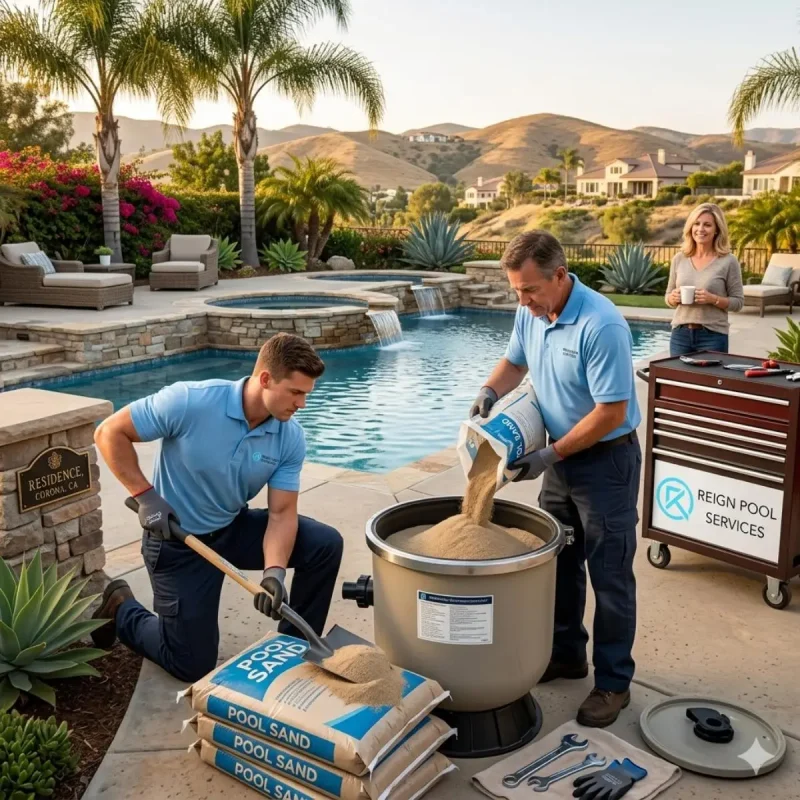
Cloudy water that will not clear? Schedule your free sand change quote from Reign Pool Services
We Are Experts With:




Pool Filter Sand Replacement in Corona: When the Sand Is Done
Signs the sand is worn out
Cloudy water that does not clear after a backwash. Filter pressure that climbs within days of cleaning, or never comes back down. Short backwash intervals. Sand on the pool floor near the returns. A backwash sight glass that runs clear in seconds because water is channeling straight through. Clumps or a crust on top of the bed when the lid comes off. Any one of those is a reason to open the tank.
How often to replace filter sand
The usual answer is every three to five years. In Corona it runs toward the short end. Hard water, long summers, and heavy dust push most pools to a sand change around three years, and a pool that has had a green episode or two sooner than that. A filter on a well-balanced pool with weekly backwashing and a calcium level kept in check gets to five.
Channeling and mudballs
Channeling is what happens when water carves a few open paths through a packed bed and the rest of the sand stops working. Mudballs are the other half of the story. Oils and calcium bind sand into golf-ball clumps that sit in the bed and never flush. Both let dirt bypass the filter, and both only go away with new media.
What Our Sand Change Includes
Depressurize and open the tank
The pump goes off, the air relief opens, and the pressure comes to zero before any clamp or lid moves. A sand filter under pressure can separate with real force, so this step is never skipped.
Remove the old media
We vacuum or scoop every pound of old sand out of the tank, including the calcified crust and the mudballs at the bottom. We bag the old sand and haul it away. It does not go in your trash can or down the storm drain.
Inspect laterals, standpipe, and valve
With the tank empty we check the lateral assembly for cracked fingers, the standpipe for splits, and the multiport valve for a worn spider gasket. Sand in the pool almost always traces back to one of these. With the tank open, this is the time to replace them.
Load fresh media to the right depth
The tank gets a few inches of water first so the sand does not crack a lateral on the way in. Then #20 pool-grade silica sand goes in to the depth the manufacturer specifies. That leaves the freeboard the bed needs to expand during backwash. Too much sand and the backwash never cleans. Too little and the bed is too shallow to filter.
Rinse, restart, and set the baseline
A new bed needs a backwash and rinse before it goes to filter, so fine dust does not blow into the pool. Then we start the pump, bleed the air, check the tank and valve for leaks, and write the clean starting pressure on the tank. When the gauge reads 8 to 10 psi above that number, it is time to backwash.
Why Corona Sand Filters Load Up Faster
Three local factors do it. The fill water carries a lot of calcium, and every evaporated gallon leaves that calcium on the grains until the top of the bed turns to crust. The season runs March to October, so the bed sees twice the sunscreen and body oil a pool in a cooler town does. And the wind brings fine dust that passes the skimmer and lodges deep in the sand, where a backwash cannot lift it. A filter that would go five years elsewhere is often done at three here. A filter cleaner run through the bed once a year, and calcium kept in check on the weekly route, buys back some of that time.
Sand, Glass, or Zeolite?
Standard #20 silica sand is the baseline and what most Corona filters run. Crushed glass media filters finer, resists channeling and calcium, and lasts longer. It costs more per bag, though less of it is needed by weight. Zeolite filters finer still and holds ammonia, but it needs its own cleaning routine and can shed into the pool if handled wrong. For most residential pools here we recommend glass for the clearest water and the longest interval. Silica wins when the budget matters more. We never use play sand, mason sand, or anything not graded for pool filters. Wrong-sized grains channel in a week.
Sand in the Pool: Broken Laterals
Sand on the floor near the returns means the media is getting past the laterals. Usually a lateral finger cracked, often from a previous sand change done without water in the tank. Sometimes the standpipe split. Rarely the sand itself has worn fine enough to pass through the slots. All three are found and fixed during a sand change, because the laterals are only reachable with the tank empty. We stock lateral assemblies for Pentair, Hayward, and Jandy filters.
Backwash Water and Corona's Drain Rules
Every backwash sends a few hundred gallons to waste. The City of Corona wants pool water in the sewer wherever that is possible. Filter media and dirty backwash water are not allowed in the storm drain. During a sand change we check where your backwash line runs and reroute it to the sewer cleanout if it drains to the street. Then we set the backwash routine to follow the gauge rather than a calendar, which keeps water use down.
Pump Size and Filter Rate
Every sand filter carries a flow rating, the most water it can take without driving dirt deep into the bed. An oversized pump, or a variable-speed pump left on full speed, pushes water through faster than the sand can catch it. That shortens the life of the media. During a sand change we check the pump against the filter’s rating and, on a variable-speed pump, set the filtration speed so the filter does its job. A pump sized right can double the life of the new sand.
When to Replace the Filter Instead
A sand change makes sense when the tank is sound and the filter fits the pool. Replace the filter when the tank is cracked or bulging, the multiport valve body has failed, the filter is too small for the pump, or you want to stop backwashing altogether. Many Corona owners switch to a cartridge filter at that point to save water. We give you the sand change price and the new filter price side by side.
Cloudy Water After a Sand Change
A little cloudiness in the first day is fine dust from the new media that the rinse did not catch. The filter clears it within a cycle or two. Cloudiness that lasts past a couple of days points to something else: an unrinsed bed, the wrong grade of sand, or a lateral that cracked on the way in. We rinse new media before filtering, and we return if the water has not cleared.
What Happens to the Water Right After
The first week on fresh media is the best the filter will ever run. Pressure sits at its lowest, the sharp new grains catch particles the old bed let through, and the water usually looks a shade bluer by the second day. We use that week to set the pump schedule. On a variable-speed pump the filtration speed comes down to the point where the pool still turns over, which keeps the new sand from being driven hard from day one. If the pool was cloudy going in, a clarifier on the first fill helps the new bed grab the fine stuff and gets you to clear faster.
Keeping the New Sand Working
Backwash when the gauge says to, not on a schedule, and run a rinse cycle after each backwash. Keep calcium hardness and pH in range so scale does not glue the bed together. Clean the skimmer and pump baskets so the filter is not catching leaves. Once a year, a filter cleaner run through the bed strips oils that backwashing leaves behind. A pool on weekly service gets all of that without you thinking about it.
Sand Filters on Spas and Small Pools
Spa-only filters and small above-ground tanks hold less media and show their age faster. The same crust and channeling happen in a 50 pound bed as in a 300 pound one, only sooner, and a spa’s hot water and heavy oil load speed it up. We change media on these too. The job takes under an hour and the parts are the same: fresh #20 silica or glass, a lateral check, a rinse, and a pressure baseline on the tank.
Multiport Valve Checks During a Sand Change
The multiport valve on top of the tank takes more abuse than any other part on the pad. Every backwash turns it, and in Corona the handle bakes in the sun all afternoon. A worn spider gasket inside lets water leak from the waste line while the filter runs, which drops the pool level a little every day and wastes water the city would rather see in the sewer. A cracked valve body weeps at the base. We check both while the tank is open, replace the gasket when it shows wear, and tell you if the valve body needs replacing. Doing it during the sand change saves a second visit and a second drain-down.
How a Pool Filter Sand Replacement Works
Call or send the form with your filter brand and the size on the label. We bring the right amount of media and a spare lateral assembly. The job takes two to three hours at the pad. The pool is filtering again before we leave and you can swim the same day.
Why Corona Homeowners Choose Reign for Sand Changes
We are based in Corona and we treat a sand change as a filter rebuild, not a bag swap. Every job includes the lateral and valve inspection, water in the tank before the media, the correct freeboard, a rinse before filtering, and a recorded clean pressure. You hear sand, glass, and replace-the-filter side by side. Call (951) 501-2227 or request a free quote.
Pool Filter Sand Replacement in Corona: Frequently Asked Questions
Quick answers from the crew.
Timing, cost, and media
Every three to five years in general, and closer to three in Corona. Hard water, long swim seasons, and dust shorten the life of the media. Cloudy water that will not clear after a backwash is the usual sign it is time.
It depends on the filter size, the media you choose, and whether a lateral or valve needs replacing while the tank is open. Glass costs more than silica. We quote the whole job, including media, parts, and haul-away, before we open the tank.
#20 pool-grade silica sand, graded to about half a millimeter. Play sand and mason sand are the wrong size and shape and channel almost immediately. Crushed glass and zeolite are the two alternatives we install.
It filters finer, resists channeling and calcium, and lasts longer. It costs more per bag. For Corona pools where the owner wants the clearest water and the longest interval between changes, glass is worth it. Silica is still a good choice on a budget.
Check the filter label or the manual for the amount, usually in pounds. A typical residential tank takes 150 to 350 pounds. The number matters because it sets the freeboard the bed needs to expand during backwash.
Problems and after the change
A cracked lateral, a split standpipe, or sand worn fine enough to pass the slots. All three are found with the tank empty, so a sand change is the time to fix them. We stock laterals for the major brands.
Yes, when the cause is spent media, which it usually is. If pressure is high because the pump is too big for the filter or the valve is failing, we catch that during the inspection and tell you.
Yes, the same day. We rinse the new media before filtering so dust does not blow into the pool, then start the pump and check for leaks. A faint haze in the first day clears on its own.
Replace the sand when the tank and valve are sound and the filter fits the pump. Switch to cartridge when the tank is cracked, the filter is undersized, or you want to stop backwashing to save water. We give you both prices.
We bag the old media and haul it away. Backwash water goes to the sewer cleanout, since Corona does not allow filter media or dirty pool water in the storm drain. We reroute a backwash line that drains to the street.