
Pool Filter Repair in Corona, CA
Pool filter repair for cartridge, DE, and sand filters: leaking tanks and clamp bands, high or low pressure, torn grids, cracked laterals, and multiport valves that will not seal.

Schedule Service!
Expert Pool Filter Repair for Corona Pools
Cloudy water, a wet equipment pad, or a gauge that will not move. The filter is usually the reason.
The filter is the only thing on the pad that actually cleans the water. The pump moves the water and the chlorine sanitizes it. Every speck of dirt, pollen, and sunscreen leaves the pool through the filter. When the filter fails, the water clouds within days and the pump works against a wall. A small leak at the clamp band turns into a cracked tank. A torn DE grid coats the pool floor in white powder. Most of these start as a cheap part and end as an expensive one if nobody looks.
Corona pushes filters harder than most places. Calcium from the fill water scales the tank and the media. Spring pollen and fall wind load the filter far faster than the manual expects. A long swim season adds oils and sunscreen. And the tank bakes in the sun all day, so O-rings dry out and plastic goes brittle years early.
Our pool filter repair service covers cartridge, DE, and sand filters from Pentair, Hayward, and Jandy, plus most other brands. We diagnose first and quote before any work. If a cleaning is all it needs, we say so. If the tank is cracked and a new filter makes more sense, we say that too and quote the pool filter installation. Call (951) 501-2227 or request a free quote.
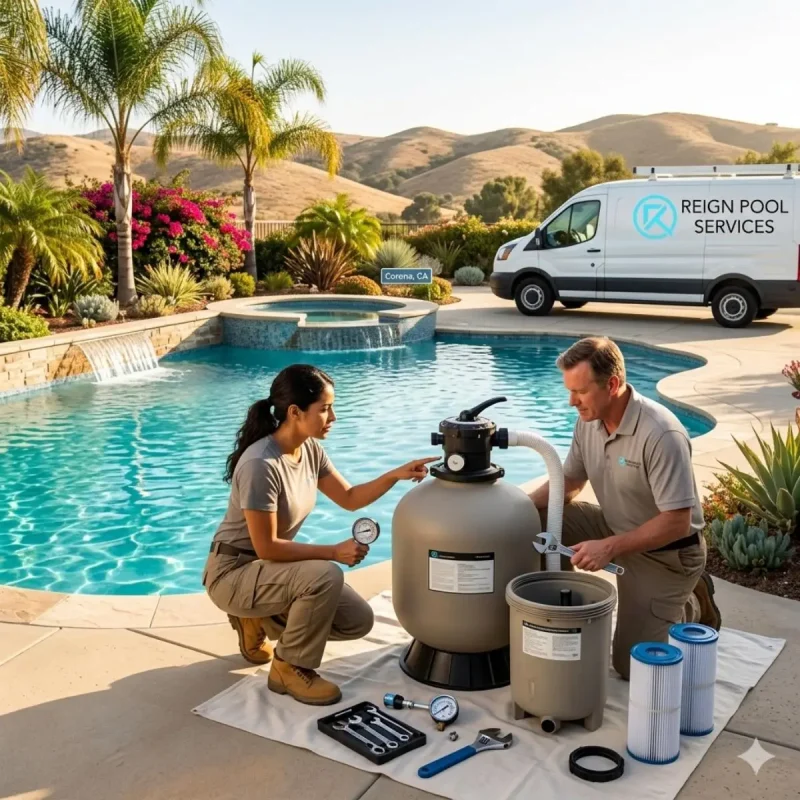
Need pool filter repair? Schedule your free quote from Reign Pool Services
We Are Experts With:




Pool Filter Repair in Corona: Reading the Pressure Gauge First
Every filter problem shows up on the gauge before it shows up in the water. A healthy filter runs at a steady clean pressure and climbs slowly as it loads. When pressure runs 8 to 10 psi over the clean reading, the filter needs cleaning or backwashing. That part is normal. The repairs start when the gauge does something the manual did not predict.
High pressure right after cleaning
If the pressure is still high after a cleaning or backwash, the media is not the problem anymore. A cartridge can collapse or load with oil so deep that a rinse cannot reach it. DE grids tear and pack solid. A sand bed can glaze with calcium or channel so the water finds one path through it. Downstream, a half-closed return valve or a blocked line reads the same way. We check all of those before we recommend new media.
Low pressure and weak returns
Low pressure with weak flow at the returns almost never means a clean filter. It means the pump is not getting water. A full skimmer basket, a full pump basket, a suction-side air leak, or a worn impeller all starve the filter. We check the pump before we blame the filter. If the pump is the fault, our pool pump repair team takes it from there.
A gauge that does not move
A gauge stuck at zero or at one number is a broken gauge. It hides every other problem on this list. Gauges are cheap and we replace them on the spot. The air relief valve next to it fails the same way. A filter that cannot bleed air runs with an air pocket at the top of the tank and filters less than it should.
Leaks: Clamp Bands, O-Rings, and Cracked Tanks
A wet pad is the most common filter call we get. Where the water comes from tells us how serious it is.
Leaking at the clamp band or tank seam
Most cartridge and DE tanks come apart in two halves held by a clamp band or bolts, with an O-ring in between. A leak at that seam is usually a dried, flattened, or dirty O-ring, or a band someone tightened unevenly. We clean the groove, lubricate or replace the O-ring, and seat the band evenly. That is a short repair. A leak that keeps coming back from the same spot means the tank halves have warped or the flange has cracked. That is a replacement.
Cracked tank
Plastic filter tanks go brittle after years of Corona sun and pressure cycles. A hairline crack weeps at first and then lets go. Tanks cannot be reliably patched. When we find a crack, we tell you and quote a new filter, because a tank that fails under pressure fails all at once.
Drain plugs, unions, and valves
Leaks at the drain plug, the unions, or the multiport valve body are O-rings, gaskets, and fittings. All are repairable. A multiport valve that drips to waste during normal filtration usually has a worn spider gasket. We rebuild it without replacing the valve.
Safety first
Pressure filters hold enough pressure to throw a lid. Before any clamp or fitting comes off, we shut the pump down, open the air relief, and wait for the gauge to read zero. Please do not open a filter tank with the pump running.
DE or Sand in the Pool
White powder on the pool floor after a backwash means the DE filter is bypassing. The usual culprits are a torn grid, a cracked manifold, or a missing or displaced manifold O-ring. We pull the grid assembly, find the tear or crack, replace the failed part, and recharge the filter with a measured amount of fresh DE. Too little powder and oils clog the fabric. Too much and the cake bridges between grids and the filter short cycles.
Sand in the pool means a broken lateral or standpipe at the bottom of the tank. The laterals are the slotted fingers that hold the sand back while letting water through. High filter pressure or a rough backwash is what cracks them. The fix means emptying the tank, replacing the damaged laterals, inspecting the rest, and refilling with the correct grade of sand. Since the sand is out anyway, that is also the moment for a sand change if the old bed is worn smooth.
Short Filter Cycles and Cloudy Water
A filter that needs cleaning every week or two is short cycling, and the cause is rarely the filter itself. Algae loads a filter faster than anything else, so we test the water first against the CDC’s healthy swimming ranges. Chemical feeders plumbed ahead of the filter dump concentrated chemicals into the media and shorten its life. A pump that is too big for the filter drives dirt deep into cartridges and through sand. A sand bed can block with minerals in Corona’s water and needs a chemical soak or a sand change.
Cloudy water with a clean filter and normal pressure points away from the filter. The chemistry is off, the pump is not running long enough to turn the water over, or there is a torn element letting unfiltered water through. We check each one rather than selling you a filter you do not need.
Cartridge, DE, and Sand: How Each One Fails
Cartridge filters fail at the end caps and pleat bands, and the pleats stay gray and stiff once the oils set. A cartridge that will not come clean after a degreaser soak is finished. A new one usually costs less than two more cleanings. DE filters fail at the grids, the manifold, and the manifold O-ring. A single torn grid puts powder in the pool and a cracked manifold puts all of it there. Sand filters fail at the laterals, the standpipe, and the multiport valve. The sand itself wears smooth over three to five years until it channels. We carry the common wear parts for Pentair, Hayward, and Jandy filters, so most repairs finish on the first visit.
Repair the Filter or Replace It?
Repair it when the tank is sound and the failed part is an O-ring, a gauge, a valve gasket, a cartridge, a grid, or a lateral. Replace it when the tank has cracked or warped, the internals have failed more than once, or the filter is too small for the pump and the pool. A filter that is too small runs at high pressure all the time, which is what cracks laterals and tears grids in the first place. We size a replacement to your pump’s flow, not to what was on the pad before. The pool filter installation page covers the options.
Why Corona Is Hard on Pool Filters
Three local conditions do most of the damage. Calcium in the fill water scales cartridge pleats, DE grid fabric, and sand grains. Scale only comes off with an acid soak after the oils are gone. Heat and sun make plastic tanks brittle and dry out O-rings years early. Wind and pollen load the filter in bursts, so a filter that was fine in May is at 25 psi after one Santa Ana event. Weekly pool service catches the pressure creep and the first drip at the clamp band before either becomes a repair. Routine pool filter cleaning keeps the media from loading to the point where pressure damages the internals.
Filter Repair and the Rest of the Pad
A filter rarely fails alone. High filter pressure strains the pump seal and starves the heater, so a heater that keeps shutting off on low flow is often a filter problem in disguise. A pump that is oversized for the filter drives dirt deep into the media and cracks laterals. And chemical feeders plumbed before the filter eat the grids and the sand from the inside. When we repair a filter we look at what is upstream and downstream of it, because fixing the filter without fixing the cause means we are back in six months. If the heater is the piece that quit, our pool heater repair team handles that side.
How a Pool Filter Repair Call Works
Call or send the form with what the filter is doing: the pressure reading, where it is leaking, or what is showing up in the pool. We come out, read the gauge, check the pump, and open the tank if it needs opening. You get the price before the work starts. Most repairs are a single visit, and the pool is filtering again before we leave.
Why Corona Homeowners Call Reign for Filter Repair
We are based in Corona and we work on filters that run on the same hard water and the same wind as ours. Every call starts at the gauge. Every tank comes down to zero pressure before we open it. And you hear repair and replacement side by side. Call (951) 501-2227 or request a free quote.
Pool Filter Repair in Corona: Frequently Asked Questions
Quick answers from the crew.
Cost, lifespan, and repair vs. replace
It depends on the part. A gauge, O-ring, or air relief valve is a small job. A multiport rebuild, a set of laterals, or a new cartridge is a mid-sized one. A cracked tank means a new filter. We diagnose first and give you the price before any work, with the replacement option beside it.
Most of them, yes. O-rings, gauges, valves, cartridges, grids, manifolds, and laterals are all serviceable. A cracked or warped tank is the one fault that means replacement, because tanks under pressure cannot be patched safely.
Tanks last ten years or more in good conditions. Cartridges run two to five years, DE grids five to ten, and sand three to five before it channels. Corona's sun and hard water sit at the short end of those ranges.
Pressure that stays high after a full cleaning, a tank that leaks from the same seam after a new O-ring, a visible crack, or internals that have failed twice in a season. We tell you which you have before we quote.
Yes. Low pressure and weak returns are usually a pump or suction problem, not the filter. We confirm the pump is moving water before we open the tank.
Leaks, pressure, and what is in the pool
Usually a dried, flattened, or dirty O-ring between the tank halves, or a band seated unevenly. We clean the groove, replace the O-ring, and seat the band. A leak that returns from the same spot means a warped or cracked flange and a new tank.
The media is past cleaning, or something downstream is restricting flow. A collapsed cartridge, torn and packed DE grids, a calcium-glazed sand bed, or a half-closed return valve all read as high pressure. We check each before recommending new media.
DE in the pool means a torn grid, cracked manifold, or displaced manifold O-ring. Sand in the pool means a cracked lateral or standpipe. Both mean we open the tank, replace the failed part, and refill the media correctly.
Usually. A valve that leaks to waste during filtration or drips from the handle has a worn spider gasket or stem seal. A rebuild kit fixes it. A cracked valve body is the only case that calls for a whole new valve.
Check the chemistry, the run time, and the element. Algae clouds water that no filter can clear. A pump that runs too few hours does not turn the water over. A torn cartridge or grid lets water bypass the media. We rule out all three before touching the filter.