
Pool Pump Installation in Corona, CA
Pool pump installation and replacement: variable-speed pumps sized to your pool and plumbing, wired safely, programmed for low power use, and tied into your automation.

Schedule Service!
Expert Pool Pump Installation and Replacement for Corona Pools
The pump is the biggest energy user in a Corona backyard. The right one cuts that bill and clears the water.
A pool in Corona runs its pump longer than almost anywhere. The season is long, the heat is relentless, and the dust and pollen mean the filter needs more hours of flow to keep the water clear. An old single-speed pump pulls full power every hour it runs. On a Corona electric bill that shows up fast. A variable-speed pump doing the same job at low speed uses a fraction of the power. It runs almost silent, and it filters the water better because it runs longer.
That is why nearly every pool pump installation we do in Corona is a variable-speed pump. California’s Title 20 rules require it for most residential replacements, and the math would push you there anyway. The part that matters is sizing and programming. A pump that is too big for the plumbing wastes power and pushes dirt through the filter. A pump that is never programmed runs at full speed all day and saves nothing. We size the pump to your pool, your pipe, and your filter. Then we set the schedule so it does its job at the lowest speed that works.
We install Pentair, Hayward, and Jandy pumps and handle the plumbing and the electrical. We also make the new pump talk to whatever automation you already have. If your old pump just needs a seal or a capacitor, our pool pump repair page is the better stop. If it is time for a new one, call (951) 501-2227 or request a free quote.
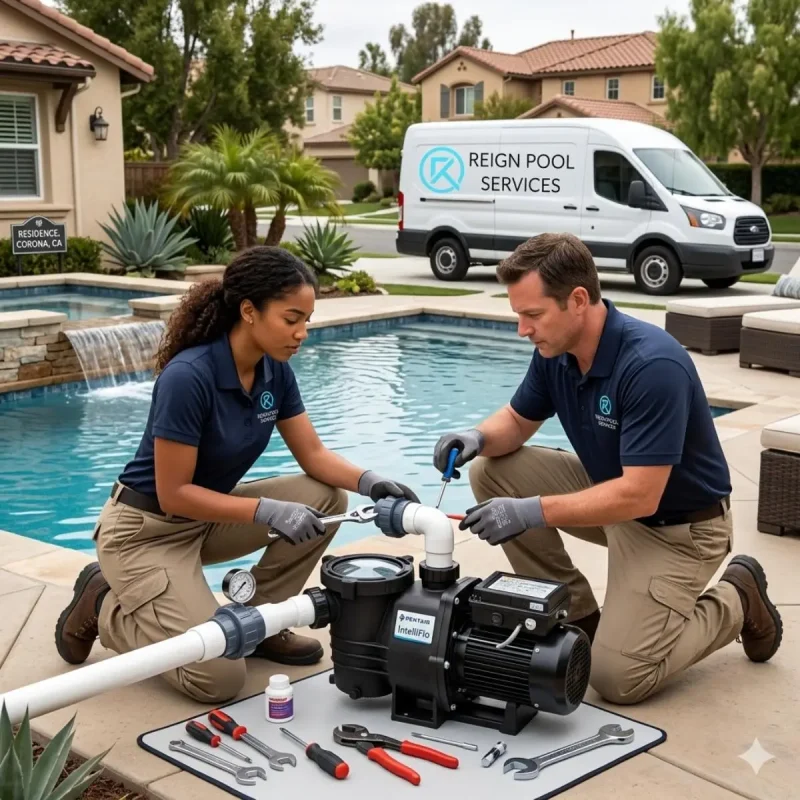
Need a new pool pump? Schedule your free quote from Reign Pool Services
We Are Experts With:




Pool Pump Installation in Corona: Why Variable-Speed Wins
A pump’s power draw rises with the cube of its speed. Cut the speed in half and the pump uses roughly one eighth of the power. That one fact explains everything about modern pool pumps. A single-speed pump has one setting, full speed, so every hour of filtration costs full price. A variable-speed pump runs its filtration hours at a low speed that moves plenty of water for the filter. It only ramps up for the cleaner, the spa, or a heater call.
The savings are real on a Corona pool because the run time is long. A pool that ran a single-speed pump eight hours a day in summer can run a variable-speed pump twelve hours at low speed. It filters more water and still cuts the pump’s share of the electric bill by a wide margin. The pump is quieter too. At filtration speed most variable-speed pumps are hard to hear from the patio.
What California requires
Title 20 appliance standards from the California Energy Commission require most replacement pool pump motors of half a horsepower and up to be variable-speed. Single-speed filtration pumps of a horsepower or more are no longer sold for residential use. In practice, if your pump dies in Corona, the replacement will be variable-speed. We handle the compliant model selection so you do not have to read the regulation.
Sizing the Pump to Your Pool
Horsepower is the wrong number to shop by. What matters is flow. How many gallons per minute does the pump have to move to turn the pool over, and how much resistance do the plumbing, filter, heater, and fittings put in its way? That resistance is total dynamic head. It is why the same pump moves very different amounts of water on two different pools.
We size from the pool’s volume and the turnover it needs. Then we check the pipe size, the filter’s rated flow, and anything else on the pad. A pump that is too big for the pipe cavitates and wastes power. A pump that pushes more flow than the filter is rated for drives dirt through the media and into the pool. A pump that is too big for the drain covers raises suction at the drain, which is a safety issue. Bigger is not better on a pool pad. Matched is better.
What Our Pool Pump Installation Includes
Assessment at the pad
We look at the existing pump, the plumbing size and layout, the filter, the heater, any salt cell or automation, and the electrical supply. That tells us which pump fits and whether anything else on the pad needs attention while we are there.
Pump selection
Variable-speed pumps from Pentair, Hayward, and Jandy, chosen for the pool’s flow needs and for compatibility with your automation. We explain the options plainly and quote the whole job, including the pump.
Removal and installation
We pull the old pump and re-plumb as needed with new unions, so the next service is easier. Then we mount the new pump level and make the electrical connections to code. If the pad wiring is tired or the breaker is wrong for the new motor, we tell you before we start.
Programming
This is the step that saves the money. We set the filtration speed low enough to be cheap and high enough to turn the pool over. Then we add higher-speed windows for the cleaner, the spa, the heater, or a salt cell that needs a minimum flow. Then we check the schedule against the filter pressure and the skimmer action.
Automation integration
If the pool runs Pentair IntelliCenter or EasyTouch, Hayward OmniLogic, or Jandy iAquaLink, we connect the pump to it. The automation runs the schedule and you can see it on your phone. Mixing brands sometimes takes an adapter or a relay, and we sort that out before the quote.
Startup and walkthrough
We prime the pump, bleed the filter, check for leaks at every joint, confirm flow at the returns, and record the clean filter pressure. Then we show you the schedule and how to change it.
Signs It Is Time for a New Pool Pump
Some pumps announce the end. A cracked housing, a motor that has burned out, or a pump that has needed two repairs in a season is done. Others just get expensive. A single-speed pump that still runs is costing more every month than a variable-speed pump would, and the gap pays for the new pump over a few seasons. Other signs: the pump is loud enough to hear from the house, it struggles to prime, it cannot keep up with a cleaner or a spa, or the pad has been upgraded around it and the pump is the last old piece. If the parts for your pump are no longer made, that decides it.
Pool Pump Replacement: What the Job Looks Like on the Pad
A pool pump replacement in Corona is usually a half-day job. We shut the system down, close the valves, and cut the old pump out at the unions or the pipe. The new pump goes on a level base with fresh unions on both sides, which means the next pump swap or seal job takes minutes instead of a plumbing job. The wiring goes into the new motor’s junction box, and on a variable-speed pump we check the breaker size and the bonding lug. Then we prime, bleed, and leak-check before the schedule gets set. If the old pump was undersized or oversized for the pipe, this is also when we fix the plumbing that was fighting it.
Pump Brands and Models We Install
Pentair IntelliFlo and SuperFlo VS, Hayward TriStar VS and Super Pump VS, and Jandy VS FloPro and ePump cover most of what we install in Corona. All three brands make reliable variable-speed pumps, and the right one usually follows the automation already on the pad. We carry the common unions, fittings, and adapters so the install finishes in one trip.
Replace the Motor or the Whole Pump?
A motor-only swap makes sense when the wet end is sound: no cracks in the housing, a good impeller and diffuser, and a pump that is only a few years old. The replacement motor has to match the horsepower and service factor of the original. Under Title 20 that replacement motor will itself be variable-speed in most cases. A whole new pump makes more sense when the housing is cracked, the pump has failed before, it is a single-speed unit, or you want the full efficiency and automation features. We give you both prices.
Pumps for Pool and Spa Combos, Water Features, and Salt Systems
A pool and spa combo needs a pump that can hit spa-jet speed and still run quietly for pool filtration. That is what variable-speed does well. Water features, in-floor cleaners, and solar heating each need a speed window of their own. A salt chlorine generator needs a minimum flow to make chlorine, so the filtration speed cannot drop below what the cell needs. We build the schedule around everything on the pad, the filter included.
Why a Corona Pool Pump Has to Be Programmed, Not Simply Installed
We see a lot of variable-speed pumps in Corona running at full speed all day because nobody set them up. They cost as much to run as the single-speed pumps they replaced. Our weekly pool service customers get the schedule checked on service visits, because the right speed changes with the season. Winter filtration needs fewer hours and a lower speed. A July heat wave needs more. The pump should match that, and ours do.
New Pumps and the Rest of the Pad
A new pump changes the flow through everything downstream of it. A filter that was fine with the old pump can run at a different pressure, so we record the new clean pressure for the next filter cleaning. The heater’s pressure switch needs enough flow at filtration speed to stay closed. Otherwise the heater will not fire during the low-speed hours. The salt cell has its own minimum too. A pool pump installation done right accounts for all of that, which is why we look at the whole pad rather than the pump alone. If the filter is also at the end of its life, a pool filter installation at the same time means one trip and a pump and filter sized to each other.
How a Pool Pump Installation Works
Call or send the form with the pump you have and what it is doing. We come out, look at the pad, and quote the options with the whole job priced. Most pump installations are a same-day job once the pump is on hand, and the pool is running again before we leave. If the job needs a permit through the City of Corona Building Division, we tell you up front and handle it.
Why Corona Homeowners Choose Reign for Pump Installation
We are based in Corona. We size pumps to the pool rather than to the shelf, and we program every one we install. You get the repair and replacement options side by side and the whole job priced. The pump is quieter and cheaper to run from its first day. Call (951) 501-2227 or request a free quote.
Pool Pump Installation in Corona: Frequently Asked Questions
Quick answers from the crew.
Cost, rules, and sizing
It depends on the pump, the plumbing, and the wiring on your pad. A straight swap with good wiring is the simplest job we do. New unions, a breaker change, or automation integration add to it. We quote the whole job, including the pump and haul-away, before we start.
For most residential replacements, yes. Title 20 requires replacement pool pump motors of half a horsepower and up to be variable-speed. Single-speed filtration pumps of one horsepower or more are no longer sold for home pools.
Size by flow, not horsepower. We work from the pool's volume and turnover, the pipe size, and the filter's rated flow. A pump that is too big wastes power, pushes dirt through the filter, and raises suction at the drain. Matched beats bigger.
Usually longer than the old pump, at a much lower speed. Eight to twelve hours at filtration speed is typical in a Corona summer, with short high-speed windows for the cleaner, spa, or heater. Winter needs fewer hours.
Yes, when it is programmed. Pump power falls sharply with speed. Running slow for more hours uses far less than a single-speed pump running fewer hours at full speed. A variable-speed pump left at full speed saves nothing.
Brands, automation, and timing
All three make good variable-speed pumps. We pick by what fits your pool's flow and your automation. If you already run a Pentair, Hayward, or Jandy automation system, matching the pump brand usually makes the integration simpler.
Usually. Same-brand pumps connect directly. Mixed brands often need an adapter or a relay to run the schedule. We confirm compatibility before we quote so you are not surprised.
If the housing, impeller, and diffuser are sound, yes. The motor has to match the original's horsepower and service factor. Under Title 20 it will usually be variable-speed. A cracked housing or a single-speed pump is better replaced whole.
Most are a same-day job once the pump is on hand. New wiring, a breaker change, or a permit inspection can add time. The pool is normally back in service the same afternoon.
A like-for-like swap often does not. New electrical circuits or significant changes usually do, through the City of Corona Building Division. We tell you before the job whether yours needs one and handle it if it does.