
Pool Acid Wash in Corona, CA
Pool acid wash and drain-and-clean service: the pool drained safely, stains and calcium scale stripped from plaster or pebble, the acid neutralized, and the pool refilled and balanced.

Schedule Service!
Expert Pool Acid Wash and Drain and Clean for Corona Pools
In Corona, hard water writes its history on your plaster. An acid wash erases it.
Every pool in Corona fills from the same mineral-heavy water. Over the years that water leaves calcium on the walls, metals in the plaster, and a gray, blotchy film that brushing never lifts. Add a few summers of sun, a wind event or two, and maybe one green pool episode. The finish that was bright white at the start now looks tired and uneven. Chemicals cannot fix that from inside the water. The stain is in the surface itself.
A pool acid wash is the reset. We drain the pool, apply a diluted muriatic acid solution to the exposed plaster, and scrub away a paper-thin layer of surface along with everything embedded in it. Then we neutralize the acid, rinse, and refill. The pool comes back looking years newer. Done correctly, it is one of the fastest ways to bring an old finish back. Done wrong, it etches plaster, loosens pebble, and shortens the life of the surface. That is why Corona homeowners call us rather than renting a pump.
We acid wash plaster, quartz, and pebble pools, and spas too. The same visit handles a chlorine wash when the problem is algae rather than minerals. We also perform a drain and clean when the water itself is past saving. Call (951) 501-2227 or request a free quote.
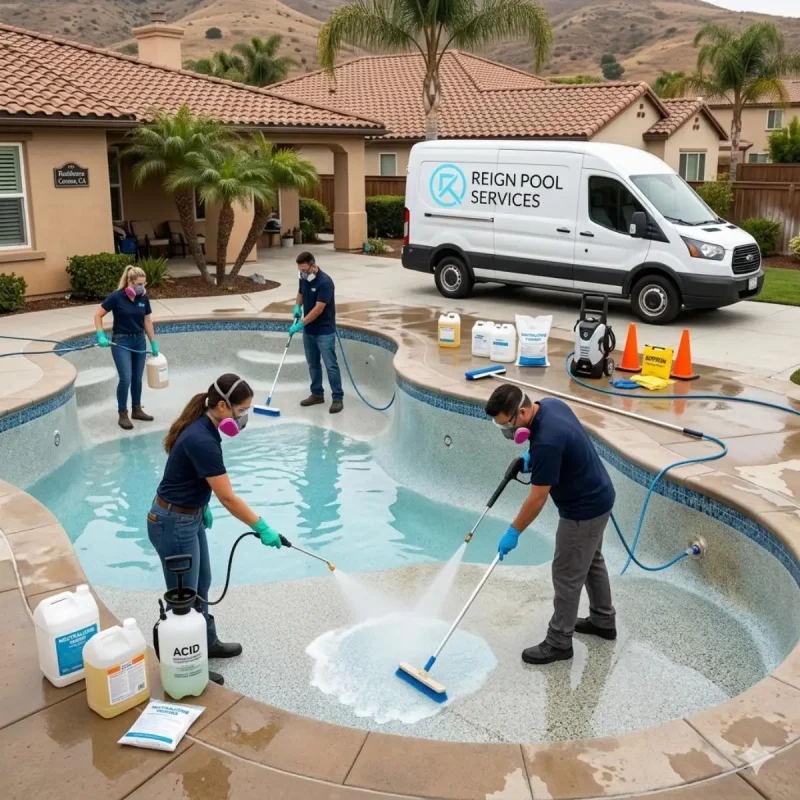
Need a pool acid wash or drain and clean? Schedule your free quote from Reign Pool Services
We Are Experts With:




Pool Acid Wash in Corona: What It Removes and How It Works
The acid wash works on one simple principle. Plaster is mostly calcium, and so is the scale stuck to it. A mild acid dissolves the outermost layer of both, and the stains come away with that layer. The surface underneath has never seen sunlight or pool water. It is the color the pool was on the day the plaster cured.
What a pool acid wash removes
Calcium scale along the waterline and in the pores of the plaster. Iron, copper, and manganese stains, including the purple cast that copper leaves behind. Algae scars left after a green pool has been cleared. Dirt and leaf tannins pressed into the finish. General graying and blotching from years of sun and chemistry swings.
What it does not fix
An acid wash does not repair pitted or rough plaster. It takes material off, so pitting shows more afterward, not less. It does not fill cracks or hollow spots. And it does not kill algae. Algae needs chlorine. If your plaster is thin, chalky, or flaking, we tell you before we drain a drop of water, because the right answer may be a chlorine wash, a spot stain treatment, or a conversation about resurfacing.
Acid Wash or Chlorine Wash? Picking the Right Drain and Clean
Both treatments start with a drained pool, and homeowners mix them up. The stain tells us which one you need.
Chlorine wash for organic problems
A chlorine wash uses a strong chlorine solution to bleach and sanitize the surface. It kills algae living in the plaster pores, lifts organic discoloration, and leaves the plaster itself alone. After a green pool, when the walls are stained but the surface is sound, this is the right call. Chlorine is also the gentler option for pebble finishes and older plaster that cannot afford to lose material.
Acid wash for mineral problems
Calcium, metals, and deep gray discoloration do not respond to chlorine. They need acid. When a pool has both algae scars and scale, we chlorine wash first to kill the organics, rinse, and then acid wash to handle the minerals. Doing it in that order protects the plaster and gives a cleaner result.
When the water is the problem
Sometimes the surface is fine and the water is not. Calcium hardness, cyanuric acid, or total dissolved solids climb so high that no amount of chemistry brings the water back into balance. Corona fill water starts hard, and after years of evaporation and topping off it gets harder. In that case a drain and clean with fresh water solves what chemicals cannot, and a light acid wash while the pool is empty is a small add-on.
Draining a Pool Safely in Corona
The drain is the part of the job that can hurt a pool, and it is where experience matters most.
Hydrostatic pressure
Groundwater pushes up on the underside of an empty shell. In areas with a high water table, that pressure can crack a pool or lift it out of the ground. Most Corona pools sit on well-drained ground and have a hydrostatic relief valve in the main drain. We confirm the valve works before we pull water, and we never leave a pool empty longer than the job needs. If the soil around your pool stays wet, or the pool sits low in a yard, we talk through the risk before we start.
Where the water goes
The City of Corona has rules about pool water. Pool water should go to the sanitary sewer through a cleanout wherever that is possible. It can only go to the storm drain when the chlorine is near zero and the pH is neutral, and acid rinse water never goes to the storm drain. We route the drain to the sewer and we neutralize every gallon of acid wash rinse before it leaves the pool. You are not left with a fine or a dead lawn.
Sun and heat
Exposed plaster dries and cracks in Corona heat. We schedule washes to keep the pool empty for the shortest window, work early when summer temperatures climb, and keep the surface wet while we work.
What Our Pool Acid Wash Includes
Inspection before draining
We look at the plaster or pebble, the stain type, the main drain and hydrostatic valve, and the equipment pad. You get a clear answer on acid wash, chlorine wash, or both, and a price for the whole job before any water moves.
Equipment protection and drain
We shut the pump, heater, and salt cell down and isolate the plumbing so acid never reaches the equipment. Then we pump the pool to the sewer cleanout and remove debris from the floor.
Controlled acid application
We pre-dilute muriatic acid with water, apply it in sections with the surface wet, and scrub while it works. The acid stays on the plaster only as long as the stain needs. A longer dwell does not clean better. It only takes more plaster.
Neutralize and rinse
Every section gets rinsed and the collected water neutralized with soda ash before it is pumped out. We check the pH of the waste water so nothing acidic leaves the property. The pool floor is rinsed to a neutral pH before refill.
Refill and start-up balance
Fresh plaster is hungry. Low calcium and low pH water dissolves it fast. We refill, then set alkalinity, pH, and calcium hardness to protect the fresh surface, add a sequestering agent to keep metals from staining the new layer, and brush the pool. The filter runs continuously for the first days. Chlorine goes in once the water is balanced.
How Often Should a Pool Be Acid Washed?
Each acid wash removes a thin layer of plaster, so there is a limit. Most plaster finishes tolerate a handful of washes over their life. We recommend an acid wash only when stains and scale will not respond to brushing, chemistry, or a chlorine wash. For most Corona pools that means every five to seven years, sooner for pools that run hard water and long swim seasons, and never on a schedule. A pool that is kept in balance on weekly pool service goes far longer between washes, because calcium that stays in solution never becomes scale.
Acid Washing Pebble and Quartz Finishes
Pebble finishes hold stains in the cement between stones, and the same acid that cleans the cement can loosen the pebbles if it sits too long or runs too strong. Quartz finishes sit between plaster and pebble in how they behave. We use a lighter mix and a shorter dwell on aggregate finishes, and we test a small area first. On a pebble pool the goal is to brighten the cement and clear the scale without changing the texture.
Pool Stain Removal Without Draining
Not every stain needs a full acid wash. Fresh metal stains often lift with a stain treatment and a sequestering agent while the pool stays full. Small calcium deposits on tile come off during a tile cleaning. Spot stains on steps respond to a localized treatment. Part of the first visit is telling you when a drain-and-clean is overkill, because a full acid wash is a bigger decision than most people realize.
What the Finish Looks Like Afterward
Expect a brighter, more even surface, not a new one. Old plaster comes back closer to white, and a pebble finish shows its stone colors again instead of a gray haze. Minor shadows where metals sat for years may remain faint. Any pitting that was hidden under scale will now be visible. We walk the empty pool with you before refill so you see the result while the surface is dry. That is also when we point out any spots that need patching before water goes back in.
Keeping the New Surface Bright
The first month after an acid wash decides how long the result lasts. Fresh plaster gives up calcium to water that is low in hardness or pH, so we set the start-up chemistry to protect it. After that, the job is prevention. Keep calcium hardness, alkalinity, and pH in range every week. Brush the walls so dust and early scale never bond. Use a sequestering agent if your fill water carries metals. Fix any copper source, like an old heater core or a copper algaecide habit. A pool that stays balanced on a weekly route can go a decade or more without needing another wash.
Why Corona Pools Stain Faster
The fill water is the main reason. Corona water carries a lot of calcium, and every gallon that evaporates in a long summer leaves its minerals behind. Hardness climbs each year the pool is not drained. Heat speeds scale formation on the warmest surfaces, like the steps and the shallow end. Wind brings dirt and leaves that sit on the floor and leave tannin shadows. Older galvanized plumbing and some algaecides add copper. None of it is anyone’s fault, and all of it ends up in the plaster.
How a Pool Acid Wash Works With Reign
Call or send the form with a photo of the stains and the type of finish if you know it. We come out, inspect the surface and the drain valve, and quote the job. Most acid washes take one day for the drain and wash and another day or two to refill. We return to balance the water once the pool is full. You are swimming again within a few days.
Why Corona Homeowners Choose Reign for Acid Washing
We are based in Corona and we treat an acid wash as a surgical job, not a power wash. Every pool gets an inspection before draining, a hydrostatic check, sewer-routed discharge, pre-diluted acid applied in sections, full neutralization, and a start-up balance that protects the fresh plaster. You hear acid wash, chlorine wash, and leave-it-alone side by side. Call (951) 501-2227 or request a free quote.
Pool Acid Wash in Corona: Frequently Asked Questions
Quick answers from the crew.
Cost, need, and how often
It depends on the size of the pool, the finish, how heavy the staining is, and whether a chlorine wash is needed first. The refill water is a separate cost on your water bill. We inspect first and quote the whole job before any water leaves the pool.
Chemicals treat the water. Stains and scale live in the plaster surface, and once they set in, only a surface treatment removes them. Fresh metal stains sometimes lift with a stain treatment while the pool is full. Set-in calcium and gray discoloration need an acid wash.
It removes a paper-thin layer of plaster along with the calcium scale, metal stains, and algae scars embedded in it. The surface underneath is the original color of the finish, so the pool looks years newer.
A limited number over the life of the finish, because each wash takes material off. Most Corona pools do well on one every five to seven years, and only when stains will not respond to anything gentler. Pools kept in balance on weekly service go longer.
We do not recommend it. Muriatic acid burns skin and lungs, the drain can damage the shell if groundwater is high, and acid left too long or mixed too strong ruins plaster permanently. Corona also restricts where the waste water can go.
Finish, draining, and timing
Yes, with a lighter mix and a shorter dwell. Acid cleans the cement between pebbles and can loosen them if it runs too strong. We test a small area first and often recommend a chlorine wash on pebble when the problem is organic.
It can if groundwater pushes up on the empty shell. We check the hydrostatic relief valve before draining, keep the pool empty as briefly as possible, and talk through the risk on pools that sit low or in wet soil. Most Corona pools drain safely.
To the sanitary sewer through a cleanout. Corona allows storm drain discharge only when chlorine is near zero and pH is neutral, and acid rinse water never goes to the street. We neutralize all rinse water before it is pumped out.
No. It removes material, so pitting and roughness show more afterward. If your plaster is rough, thin, or flaking, we will tell you before draining and talk about a chlorine wash or resurfacing instead.
Usually a few days. One day for the drain and wash, a day or two to refill, then a start-up balance to protect the fresh plaster. Once alkalinity, pH, calcium, and chlorine are in range, you are back in the water.