
Spa Cleaning in Corona, CA
Spa cleaning for attached spas and standalone hot tubs: water balanced, shell and jets cleaned, filter serviced, and a drain and refill when the water is spent.

Schedule Service!
Expert Spa Cleaning for Corona Hot Tubs and Attached Spas
Hot water, small volume, and Corona's hard fill water. The spa is the hardest-working water in your backyard.
A spa is a different animal from the pool next to it. The water runs at 100 degrees or more, and there is far less of it. One person in a 400-gallon spa puts the same load on the water as nine people in a pool. So the sanitizer burns off faster, the pH climbs faster, and anything you get wrong shows up the same day. Cloudy water, foam, a chlorine smell, and a crusty white ring on the jets are the usual complaints we hear from Corona spa owners. Every one of them traces back to the same few causes.
Our spa cleaning service covers both kinds of spa. We add attached spas, which share a pump and filter with the pool, to a weekly route. Standalone hot tubs with their own cartridge and heater get a visit built around that equipment. Either way the routine is the same. We test and balance the water, clean the shell and waterline, and service the filter. We drain and refill on a schedule set by how much you use the spa. Because Corona water is heavy with calcium, descaling the jets and heater is part of the plan rather than an afterthought.
If your spa is cloudy, foaming, or scaled up, call (951) 501-2227 or request a free quote. The same goes if you want it looked after weekly with the pool. We will look at the spa and tell you what it needs.
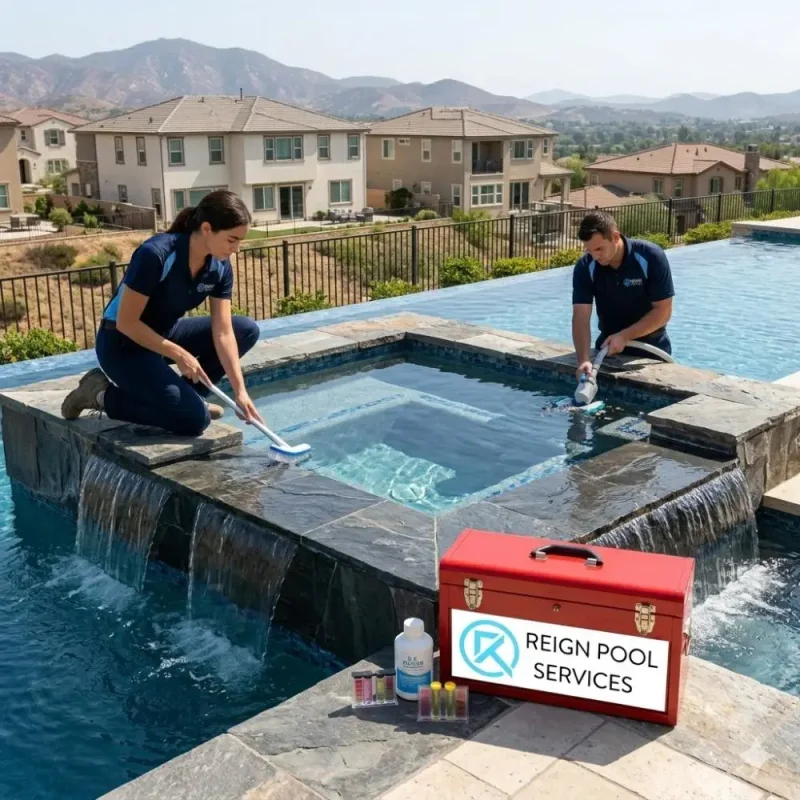
Need spa cleaning? Schedule your free quote from Reign Pool Services
We Are Experts With:




Spa Cleaning in Corona: Why Hot Water Changes Everything
A spa holds a few hundred gallons where a pool holds tens of thousands. Then it heats that water to around 100 degrees and runs air through it. Those three things change the chemistry in ways a pool never sees. They are the reason a spa needs its own cleaning routine.
Bather load
The math is simple. A typical pool gives each swimmer about 1,800 gallons of water. A spa gives each bather about 200. Every person who climbs in brings sweat, body oils, lotion, deodorant, and whatever was on the swimsuit. A pool dilutes all of that. A spa does not. So the sanitizer has far more to deal with per gallon, and it runs out in hours rather than days.
Heat and aeration
Warm water speeds up every reaction in it, so chlorine and bromine break down faster than they would in a cool pool. The jets and the blower push air through the water constantly. That aeration drives off carbon dioxide. Losing it pushes pH upward and burns through total alkalinity faster than a still pool would. So a spa you balanced on Monday can read high on pH and low on alkalinity by Thursday with nobody adding a thing.
Hard water and scale
Calcium becomes less soluble as water gets hotter. Corona’s fill water already runs high in calcium, so in a hot spa it comes out of solution and lands on the warmest surfaces first. That means the heater element and the jet faces. The white crust around the jets is the part you can see. The same crust forming inside the heater is the part that ends up as a spa repair call. Keeping calcium hardness and pH in range, and using a scale inhibitor where the water calls for it, is how we slow that down.
Small volume and dosing
The same small volume that makes a spa easy to heat makes it easy to overdose. A capful of shock that would vanish in a pool can send a spa far past safe levels. That is why we measure doses against the actual gallons of the spa rather than guessing. We also test before and after rather than adding chemicals on a schedule.
What Our Spa Cleaning Service Includes
Every spa cleaning visit follows the same routine. It does not matter whether the spa is attached to a pool or sits on its own.
Water testing and balancing
We test sanitizer, pH, total alkalinity, and calcium hardness every visit. On chlorine spas we hold free chlorine in the range the CDC recommends for hot tubs, and on bromine spas we hold total bromine between 4 and 6 ppm. Then we bring pH and alkalinity back into range, because the aeration will have pushed them out since the last visit.
Shell, waterline, and jet cleaning
We skim the surface, wipe the waterline where oils and scale collect, and brush the seats and floor. We descale the jet faces when the calcium starts to build. On an attached spa we also brush the spillway and the tile, because that is where the scale line shows first.
Filter service
A spa cartridge works harder than a pool cartridge for its size. So we inspect it at every visit and rinse it when it needs it. A deep clean with a degreaser soak comes around on a schedule. If a cartridge stays gray or flows poorly after cleaning, we replace it. Our pool filter cleaning page explains the soak process in detail.
Equipment check
While we are at the spa we check the heater, the pump, the blower, the jets, and the cover. A cover that has gone heavy with water is dumping heat and growing mildew on the underside. A heater that takes longer to reach temperature every month is usually scaling up. We tell you before it becomes a repair.
Drain and refill
Spa water does not last forever. When the dissolved solids climb or the water stops responding to balancing, we drain the spa. Then we clean the shell, purge the lines if they need it, refill, and start the chemistry fresh. More on when that is due below.
How Often Should a Spa Be Drained in Corona?
This is the question we get most, and there is a real answer. Divide the spa’s gallons by three, then divide by the number of people who use it on a typical day. The result is the number of days between drains. A 400-gallon spa used by two people each day works out to about 67 days. The same spa used by one person a few times a week stretches toward four months.
There is a second check we use alongside the calendar. Total dissolved solids rise as chemicals and bather waste build up. Once they have climbed about 1,500 ppm above the fresh-fill reading, the water is spent. At that point no amount of chemistry brings it back. Cloudiness returns a day after each treatment and foam keeps coming back. That is the water telling you it is time.
Corona’s hard fill water adds a wrinkle. Every refill starts with a high calcium reading. So we test the fresh water and set the chemistry from that number rather than a generic target. On a heavily used spa we also recommend a partial drain between full ones, which keeps calcium and TDS in check without the full job.
Cloudy, Foamy, or Smelly Spa Water: What It Means
These three complaints make up most of the calls we get for spa cleaning in Corona, and each one points somewhere specific.
Cloudy water
Cloudy spa water comes from low sanitizer, high pH, a dirty filter, or water that is simply old. We test first, because the fix depends on which one it is. A cloudy spa with normal chemistry and a clean filter usually needs a drain. A cloudy spa with low chlorine and high pH usually just needs balancing and a filter rinse.
Foam
Foam is almost always oils and contaminants: lotion, hair products, detergent left in swimsuits, and body oils whipped into a lather by the jets. Some algaecides also foam. A defoamer knocks the foam down, but it only masks the cause. If foam returns once we balance the water and clean the filter, the water is loaded and needs replacing.
Chlorine smell and eye irritation
A strong chlorine smell usually means too little free chlorine, not too much. The smell comes from combined chlorine, the used-up form that has already bound to sweat and oils. The fix is more sanitizer to burn it off, or a drain if the water is old, along with a reminder to rinse off before getting in.
Chlorine or Bromine for Your Spa?
Both work in a spa, and we maintain either one. Chlorine is cheaper and most attached spas use it because they share water and equipment with the pool. Bromine holds up better in hot water and does not give off the same sharp smell. It also keeps working after a first use. So it is a common choice for standalone hot tubs. Bromine is less stable in sunlight, which matters less on a covered spa. We do not mix the two or switch a spa between them without a drain, because the chemistry does not play well together. Whatever your spa uses, we hold it in the right range and tell you if a switch would make your life easier.
Attached Spas and Standalone Hot Tubs
An attached spa shares the pool’s pump, filter, and heater, so we clean it as part of weekly pool service. The spa still gets its own test and brushing on each visit, because its chemistry drifts differently from the pool. We also manage the spillover between the two bodies of water. If you are already on a weekly plan with us, ask about adding the spa to the route.
A standalone hot tub has its own small pump, cartridge filter, and heater, and it runs hot all the time. It needs its own visit rather than a quick look on the way past the pool. We set the schedule by how often you use it. Drains, filter deep cleans, and cover care are all part of the plan.
Keeping the Spa Safe to Use
Spa water should sit between 98 and 104 degrees and never above 104. Hotter than that is a health risk, and it also speeds up scale and sanitizer loss. A spa needs to turn its water over through the filter about every 30 minutes, far faster than a pool. So a clogged cartridge or a weak pump shows up as cloudy water almost at once. Because the volume is small, a spa that goes a few days without sanitizer can grow bacteria that cause skin rashes. Consistent sanitizer and regular water changes are what keep that from happening, which is the whole point of a cleaning schedule.
Why Corona Spa Owners Choose Reign
We are based in Corona and we know what the local water does to a hot tub. Every visit includes a full water test, the shell and jets cleaned, the filter checked, and a look at the heater and cover. We schedule drains from how you use the spa rather than from a calendar. Attached spas fold into weekly pool service, and standalone tubs get their own plan. If something on the spa is failing, our spa repair team handles it. Call (951) 501-2227 or request a free quote.
Spa Cleaning in Corona: Frequently Asked Questions
Quick answers from the crew.
Cost, schedule, and what is included
We usually add an attached spa to a weekly pool service plan as a monthly add-on. Standalone hot tubs we quote after a quick look at the tub and how you use it. We price one-time drains and deep cleans separately. You get the number before we start.
Test and balance the water at least weekly. Rinse the filter every week or two, and wipe the shell at the waterline as oils build. A drain and full clean comes around every one to four months depending on use.
Divide the gallons by three, then by the number of people using it each day, for the days between drains. A 400-gallon spa used by two people daily is due about every two months. Also drain when the water stops clearing after treatment.
Yes, once you add it to the plan. The spa gets its own water test, brushing, and jet check on each visit because its chemistry drifts differently from the pool. Ask us to add it when you set up service.
Water testing and balancing, waterline and shell cleaning, and jet descaling as needed. We also inspect and rinse the filter and check the heater, pump, blower, and cover. We schedule the drain and refill separately, based on the water.
Water problems and chemistry
Cloudy water points to low sanitizer, high pH, a dirty filter, or old water. Foam is oils and contaminants whipped up by the jets. We test and clean the filter first. If either comes back right after treatment, the water is spent and needs a drain.
Yes. Corona's hard water drops calcium on the hottest surfaces first, so the jets and heater scale before anything else. We descale the jets and keep calcium hardness and pH in range so it builds slower. Heavy heater scale is a spa repair job.
Either works and we maintain both. Chlorine is cheaper and standard on attached spas that share pool water. Bromine holds up better in heat and smells less, so many standalone hot tubs use it. Never mix them without a drain.
No. Soap foams in a spa and sticks in the plumbing, and it takes a line purge and a drain to get it out. If the shell needs cleaning, drain the spa and use a cleaner made for spa surfaces, then rinse before refilling.
Steady free chlorine or bromine at the right level, plus pH in range so the sanitizer works. Hot water and a small volume let bacteria grow fast when sanitizer drops. That is why we test every visit and replace the water on a schedule.