
Pool Filter Installation in Corona, CA
Pool filter installation and replacement: cartridge, DE, and sand filters sized to your pump and your pool, plumbed with unions, and started up with the clean pressure recorded.

Schedule Service!
Expert Pool Filter Installation for Corona Pools
Clear water in Corona comes down to one number. How much filter area do you have for the dirt the yard throws at it?
A pool filter is the only piece of equipment that cleans the water. The pump moves the water and the chlorine sanitizes it. Every speck of dust, pollen, and sunscreen leaves the pool through the filter. Corona gives a filter more to catch than most places. Spring pollen, fall wind, and a long hot season of heavy use. Fill water that leaves calcium behind on every surface it touches. A filter that is too small for that load runs at high pressure all summer. It clouds the water and wears out its own internals.
A new pool filter installation is the moment to get that right. We size the filter to your pump’s flow, not to whatever tank was there before. A filter pushed past its rated flow drives dirt through the media and back into the pool. We match the filter type to how you want to maintain the pool, because cartridge, DE, and sand each ask different things of their owner. And we plumb it with unions and a new pressure gauge. The next cleaning or repair then takes minutes instead of a plumbing job.
We install Pentair, Hayward, and Jandy filters, and we handle the whole job from removal to startup. If your current filter has a cracked tank or internals that keep failing, we say so. A pool filter repair in that case would only buy a season. Call (951) 501-2227 or request a free quote.
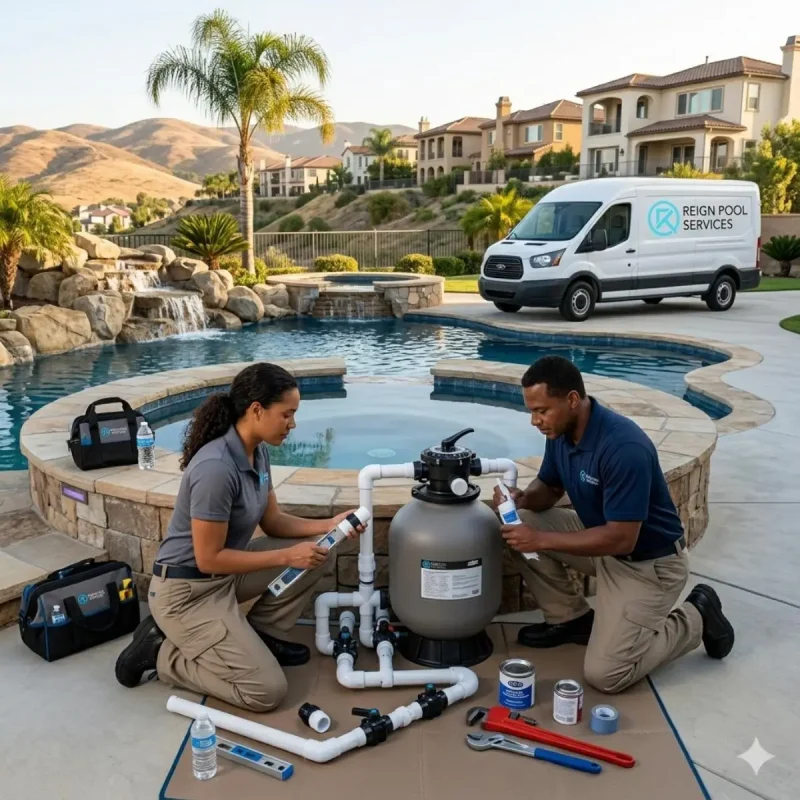
Need a new pool filter? Schedule your free quote from Reign Pool Services
We Are Experts With:




Pool Filter Installation in Corona: Cartridge, DE, or Sand
Each filter type traps dirt differently, filters to a different fineness, and asks for a different kind of upkeep. The right one for your pool depends on three things. How clear you want the water, how much maintenance you want to do, and how much water you are willing to send down the drain.
Cartridge filters
A cartridge filter catches particles down to roughly 10 to 25 microns. The pleated fabric elements pull out for a hose-down. There is no backwashing, so no water goes to waste, which matters in a city that watches its water. Cartridges have the largest filter area for their footprint. They run at the lowest flow per square foot of any filter type. That is why they pair so well with a variable-speed pump running slow. They are the most common filter we install in Corona. The trade is cleaning. The elements come out two or three times a year for a hose-down and a degreaser soak, and you replace them every few years.
DE filters
A DE filter polishes water finer than anything else on a residential pad, down to a few microns. The grids wear a coat of diatomaceous earth powder, and the powder does the filtering. DE filters backwash, then get recharged with fresh powder through the skimmer. They give the clearest water and need the most attention. That means a backwash when pressure climbs, a full grid teardown a few times a year, and powder added each time. Corona’s discharge rules apply here, since filter media cannot go into the storm drain.
Sand filters
A sand filter runs water down through a bed of graded sand and cleans itself by backwashing. It is the lowest-maintenance filter and the coarsest, catching particles in the 20 to 40 micron range. It uses the most water, because every backwash sends a few hundred gallons to waste. The sand lasts three to five years before it wears smooth and channels, at which point a sand change is due. Sand suits pools with heavy debris and owners who want to touch the filter as little as possible.
Sizing the Filter to Your Pump
The most common filter mistake in Corona is an undersized tank. Every filter has a maximum flow rate set by its area and its media. Cartridge filters are rated around 0.375 gallons per minute per square foot of element. DE runs around 2 gallons per minute per square foot of grid. High-rate sand runs far higher per square foot of bed. Push more water through than the media is rated for and bad things happen. Sand filters drive dirt deep into the bed and channel. Cartridges embed dirt so deep that cleaning cannot release it. DE grids load with oil and powder and tear early.
So we size from the pump’s maximum flow, not from the pool’s gallons alone. A variable-speed pump at full speed still has to fit under the filter’s rating. That is the speed it runs for the cleaner or the spa. A bigger filter also runs at lower pressure and goes longer between cleanings. So on a cartridge filter the step up in size is usually worth it. The pump curve, the pipe size, and the pool’s turnover all go into the pick.
What Our Pool Filter Installation Includes
Assessment at the pad
We look at the existing filter, the pump and its flow, and the pipe size. We also check the heater and salt cell downstream and the room on the pad. That tells us which filter types fit and how big the tank can be.
Filter selection
Cartridge, DE, or sand from Pentair, Hayward, or Jandy, sized to the pump and chosen for how you want to maintain the pool. We quote the whole job, including the tank, the fittings, and haul-away of the old filter.
Removal and plumbing
We shut the system down, drain and pull the old tank, and plumb the new one with unions on both sides. The next service is then a quick disconnect. On a sand or DE filter we set the multiport or backwash valve and run the waste line where the city allows it. The filter goes on a level pad with room to open the tank.
Startup and pressure baseline
We fill the tank, bleed the air, check every joint for leaks, and confirm flow at the returns. Then we record the clean starting pressure and write it on the tank. That number tells you when the filter is due for cleaning. So it matters that it is right on day one.
Pump programming
A new filter changes the resistance the pump works against. On a variable-speed pump we recheck the filtration speed so it still turns the pool over. We also confirm the heater’s pressure switch closes at that speed. A new filter installed without touching the pump schedule is only half a job.
How Filter Area Changes the Water
Filter area is the surface the water passes through, and it is printed on every tank’s label. A 100 square foot cartridge and a 420 square foot cartridge both fit a residential pad, but the larger one runs at a quarter of the flow per square foot. That means lower pressure, finer filtration, and weeks longer between cleanings. On a Corona pool that loads fast with pollen and dust, the bigger tank pays for itself in cleanings you do not do and in water that stays clear through a windy week. It also matters for turnover. The filter has to pass the pool’s full volume through itself every day without exceeding its rating, and a tank sized to the edge of that number spends the summer at the top of its gauge.
Pool Filter Replacement and the Rest of the Pad
A new filter changes the resistance in the whole system, so we look at what sits on either side of it. The pump that barely pushed through the old tank may run differently through a larger one. Downstream, the heater needs enough flow at filtration speed to stay lit. A salt cell has a minimum flow of its own. If the pump is also near the end, a pool pump installation at the same time means one trip and two pieces sized to each other. If the heater has been short cycling on low flow, the new filter often fixes it, and we check that before we leave.
Replacing an Old Pool Filter
Most of our filter installations are replacements. The tank is cracked or weeping at the seam. The internals have failed twice in a season. Pressure stays high after a full cleaning because the media is past saving. Or the filter was never big enough for the pump and has been running at the top of its gauge for years. Replacement is also the right time to switch types. Many Corona owners move from sand or DE to cartridge to stop backwashing and cut water use. We inspect the existing filter as part of the quote. You get the repair price next to the replacement price.
Filter Brands and Models We Install
Pentair Clean and Clear Plus cartridge filters, FNS Plus DE filters, and Triton sand filters. Hayward SwimClear cartridge, ProGrid DE, and Pro Series sand filters. Jandy CL and CV cartridge filters and DEV DE filters. All three brands make tanks that hold up on a Corona pad. The right one usually follows the pump and automation already there, so parts and service stay simple.
Why Corona's Water Matters for a New Filter
Calcium is the local wrinkle. Fill water here leaves scale on cartridge pleats, DE grid fabric, and sand grains. Scale only comes off with an acid soak after the oils are gone. A larger filter spreads the load so scale builds slower per square foot. Keeping calcium hardness and pH in range on weekly pool service slows it further. We also set the first filter cleaning on the calendar at install, because a new filter in Corona loads faster than the manual says.
Backwash Water and Corona's Drain Rules
Sand and DE filters send water to waste every time they backwash. The City of Corona has rules on where pool water goes. Filter media never goes to the storm drain, and the city wants pool water in the sewer wherever that is feasible. On a new install we route the waste line to the sewer cleanout. We set the backwash routine to follow the pressure gauge rather than a calendar. Owners who want to skip the question entirely choose cartridge.
How a Pool Filter Installation Works
Call or send the form with your current filter type and what it is doing. We come out, check the pump and the pad, and quote the options with the whole job priced. Most filter installations are a same-day job once the tank is on hand, and the pool is filtering again before we leave.
Why Corona Homeowners Choose Reign for Filter Installation
We are based in Corona and we size filters to the pump rather than to the old tank. Every install gets unions, a new gauge, a recorded clean pressure, and the pump schedule rechecked. You hear repair and replacement side by side, and cartridge, DE, and sand explained plainly. Call (951) 501-2227 or request a free quote.
Pool Filter Installation in Corona: Frequently Asked Questions
Quick answers from the crew.
Cost, type, and size
It depends on the filter type and size, the plumbing on the pad, and whether a backwash line needs to be run. A like-for-like cartridge swap is the simplest job. We quote the whole job, including the tank, fittings, and haul-away, before we start.
Cartridge is the usual pick: no backwashing, no wasted water, and it pairs well with a variable-speed pump. DE gives the clearest water but needs the most upkeep. Sand is the lowest maintenance and the coarsest, and it uses the most water. We match the type to how you want to maintain the pool.
Size to the pump's maximum flow, not the pool's gallons alone. Every filter has a flow rating set by its area and media, and exceeding it drives dirt through the media. A bigger filter runs at lower pressure and goes longer between cleanings, so we usually step up a size on cartridge.
Tanks last ten years or more. Cartridges run two to five years, DE grids five to ten, and sand three to five before it channels. Corona's sun and hard water sit at the short end, which is one reason we size up.
Yes. Calcium scales cartridge pleats, DE grids, and sand grains, and it only comes off with an acid soak after degreasing. A larger filter spreads the load, and keeping calcium hardness and pH in range on weekly service slows it down.
Pumps, brands, water, and timing
Yes, as long as the filter's flow rating covers the pump at full speed. We check the pump curve before choosing the tank. After install we recheck the filtration speed so the pool still turns over and the heater's pressure switch closes.
A sand or DE backwash sends a few hundred gallons to waste each time. Corona bars filter media from the storm drain and wants pool water in the sewer where feasible. Cartridge filters do not backwash at all, which is why many Corona owners switch to cartridge when they replace a filter.
All three make solid filters in every type. We usually match the filter brand to the pump and automation already on the pad so parts and service stay simple. The size and type matter more than the badge.
Most are a same-day job once the tank is on hand. Running a new backwash line or re-plumbing a crowded pad adds time. The pool is filtering again before we leave.
Repair it when the tank is sound and the failed part is an O-ring, gauge, valve, cartridge, grid, or lateral. Replace it when the tank is cracked or warped, the internals have failed twice, or the filter is undersized for the pump. We give you both prices.